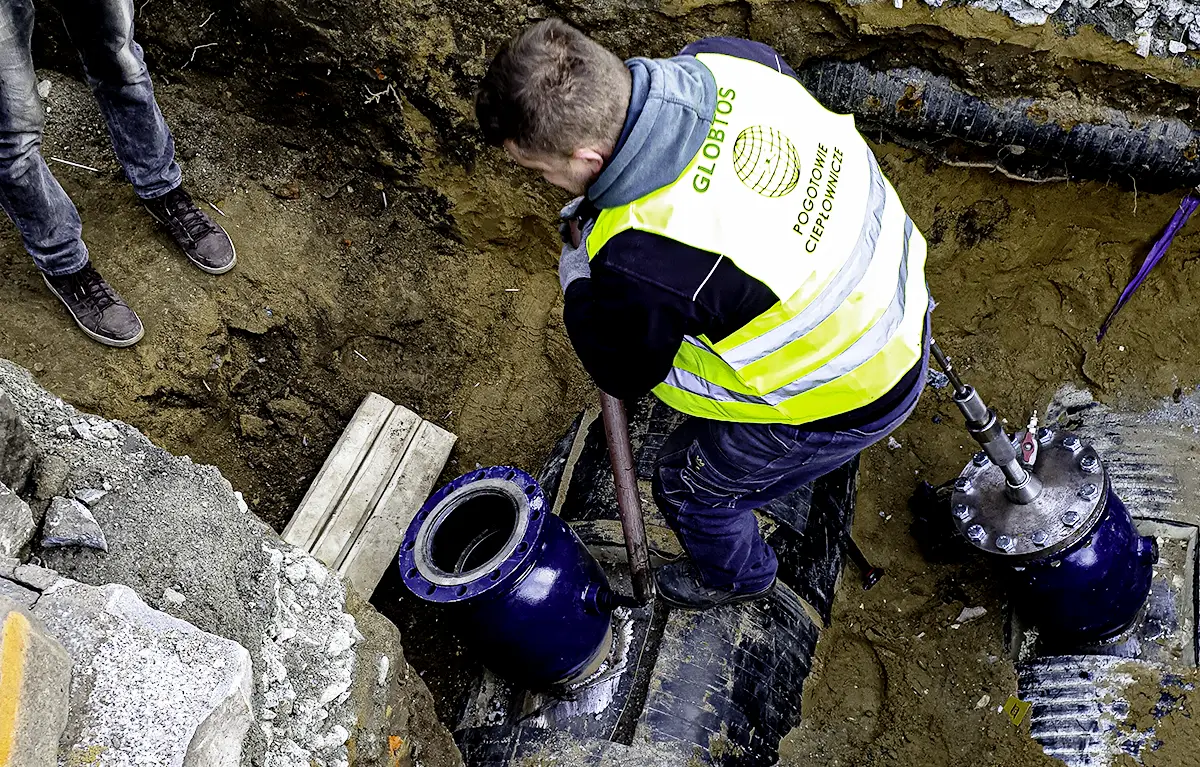
Valve selection isn’t just an “off-the-shelf purchase.” It’s a decision that determines whether, in five years, you’ll be facing a costly excavation or sleeping soundly at night. Every project faces the same dilemmas: PN25 or PN40? Full bore or reduced bore? Below, you’ll find solid answers to help you decide—without the marketing fluff.
Selecting the right pressure rating is a balance between safety and budget. Keep in mind: PN (Nominal Pressure) refers to the pressure rating at 20°C. As the temperature in the district heating network increases, the maximum allowable operating pressure decreases.
| Class | When to choose? | Characteristics |
| PN25 | Standard in Polish district heating. | Optimal cost, full safety for most municipal transmission networks. |
| PN40 | High-parameter networks, large pressure surges. | Thicker body walls, greater margin of error, higher price. |
Pro-tip: Do not overdesign the system unnecessarily. If the project specifies a stable 16 bar at 130°C, a PN25 valve made of high-quality steel (such as P235GH) will perform perfectly.
This is where misunderstandings most commonly arise.
The method of installation depends on the valve’s location:
A good valve is not just “a piece of steel.” At GLOBTOS, we focus on the details that save the day when something unexpected happens on site:
For district heating networks, steel ball valves designed for high-temperature and high-pressure operation should be used. These are most commonly weld-end or flanged valves, specifically designed for network water service.
In most urban district heating networks, PN25 is fully sufficient, provided the operating parameters are correct. PN40 is used in networks with higher pressures, significant pressure surges, or where a greater safety margin is required.
Yes. Under stable operating conditions — for example 16 bar and 130°C — a PN25 valve made from the appropriate steel provides safe and long-lasting service.
Full bore has an opening diameter equal to the pipe diameter and minimises pressure losses. Reduced bore has a smaller opening in the ball and is most commonly used on service connections and branch lines, where pressure drops are negligible.
Full bore valves are used on main network lines, where minimum hydraulic resistance is important, and in installations requiring mechanical cleaning (pigging).
No, if used in the right location. On service connections, reduced bore is a safe and cost-effective solution with no negative impact on network performance.
It depends on the location. Weld-end valves are the best choice for underground and pre-insulated installation — they provide the highest level of leak-tightness. Flanged valves are used in chambers and substations where easy dismantling and service access are required.
Because they have no bolted connections or gaskets between flanges, which eliminates the risk of leakage after the trench is backfilled. Once insulated, they become an integral part of the pipeline.
Beyond DN, PN and bore type, the key factors are: ball material (e.g. stainless steel), body material (steel rated for high temperatures), stem design, and the ability to adjust stem height to match the trench depth. Weld-end valves are the preferred choice for underground use — no bolts or gaskets between flanges means zero risk of external leakage, and once pre-insulated, the valve becomes an integral part of the pipeline. Flanged valves should be installed where access is available (chambers, substations) — they make servicing and replacement easier, but require regular inspection of bolt condition.
The right stem design increases network safety. In valves where the seal is positioned low, close to the ball, even mechanical damage to the stem will not cause the medium to leak.
The most common mistakes are: using water and gas valves instead of district heating-specific ones; over-specifying the PN class as a precaution; ignoring stem height in pre-insulated valves; and selecting a valve without analysing the network’s operating parameters.
Yes. GLOBTOS offers valves with stem height tailored to the trench depth, which significantly simplifies installation and eliminates problems during project execution.
A technical, operational and practical comparison of welded and flanged pipe and valve connections, and where each solution performs best.
Materials, construction and standards that determine durability in district heating networksAt first glance, a ball valve is simply a piece…
Hot tapping is the most effective method for modernising and expanding active district heating and industrial pipelines. It enables a…
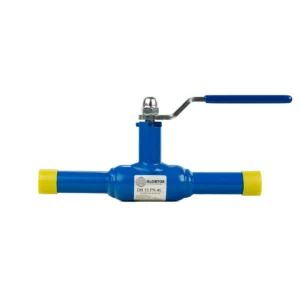
GLOBTOS standard ball valves are the foundation of safe and efficient district heating and industrial systems. Designed for years of…
Would you like us to contact you? Leave your contact details and we'll get back to you as soon as possible.


 +48 726 500 100
 shop@globtos.com
 ul. Legnicka 60d, 54-204 Wrocław