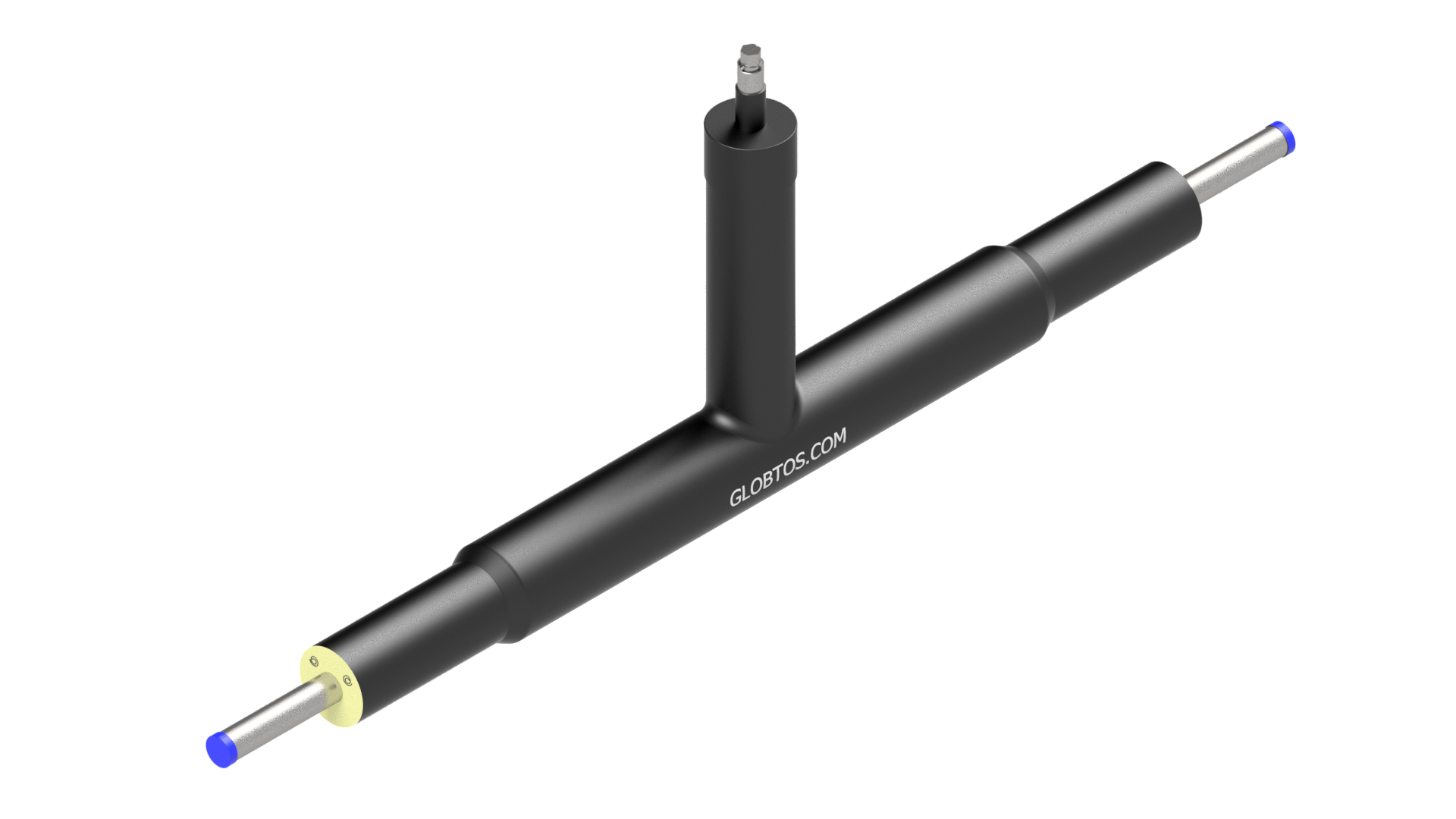
Modern industrial, power and district heating installations use two basic methods of joining pipelines and fittings: welded connections and flanged connections.
Both solutions have their own advantages, limitations and areas of application. In engineering practice, there is no universal solution for all cases. However, in modern district heating systems, especially in pre-insulated networks laid directly in the ground, welded solutions and fully welded valves are increasingly preferred.
This is primarily due to requirements regarding: durability, tightness, reducing service work, operational safety, and minimising the cost of maintaining the infrastructure.
A flanged connection consists of:
The biggest advantage of a flanged connection is the ability to:
That’s why flanged connections remain essential in many parts of an installation, particularly for:
Despite their widespread use, flanged connections carry a number of potential sources of operational problems.
Risk of leakage:
The tightness of a flanged connection depends simultaneously on:
Even small installation errors can cause:
In high-temperature installations, the following are of key importance:
These phenomena cause a gradual loss of gasket clamping force, which can lead to the connection losing its seal after a longer period of operation.
This problem is particularly significant in:
Flanged connections often require:
In practice, this means:
Flanged connections are more susceptible to:
In pre-insulated systems, every additional external element also makes it more difficult to achieve effective thermal insulation.
Unlike a flanged connection, a welded connection:
As a result, welded connections work very well in installations that are:
Well-executed welded connections are characterised by very high operational reliability.
A correctly made weld:
Welded connections:
This is particularly important in underground installations, where access to the pipeline after backfilling is difficult and costly.
In modern pre-insulated networks, welded connections:
Welded connections also have their own requirements and limitations.
They require:
Additionally:
That’s why welded connections do not completely replace flanged connections.
Flanged connections have a very important advantage in situations where components made of different materials are being joined.
This applies, among others, to connections between:
In such cases, a flanged connection is often the solution that is:
A flanged connection:
For example: a pump housing can be made of cast iron or cast steel, while the pipeline and valve are made of P235GH steel. Making a direct welded connection between such components can be technologically difficult or not recommended by the equipment manufacturer. That’s why in industrial practice the following rule is very often applied:
Welded and flanged connections are not competing solutions – they complement each other.
However, in modern district heating and pre-insulated installations, where the following are of key importance:
welded connections are currently the preferred solution for the main pipeline sections and linear fittings.
Flanged connections, in turn, remain essential:
In practice, the best results are achieved by consciously combining both technologies and using each of them exactly where it performs best.
Hot tapping is the most effective method for modernising and expanding active district heating and industrial pipelines. It enables a…

In the construction of modern transmission systems, the selection of valves that combine high mechanical strength with excellent insulation properties…
Valve selection isn’t just an “off-the-shelf purchase.” It’s a decision that determines whether, in five years, you’ll be facing a…
How GLOBTOS dry stem technology eliminates the risk of leakage in pre-insulated district heating valves, and offers flexible stem length…
Would you like us to contact you? Leave your contact details and we'll get back to you as soon as possible.


 +48 726 500 100
 shop@globtos.com
 ul. Legnicka 60d, 54-204 Wrocław